
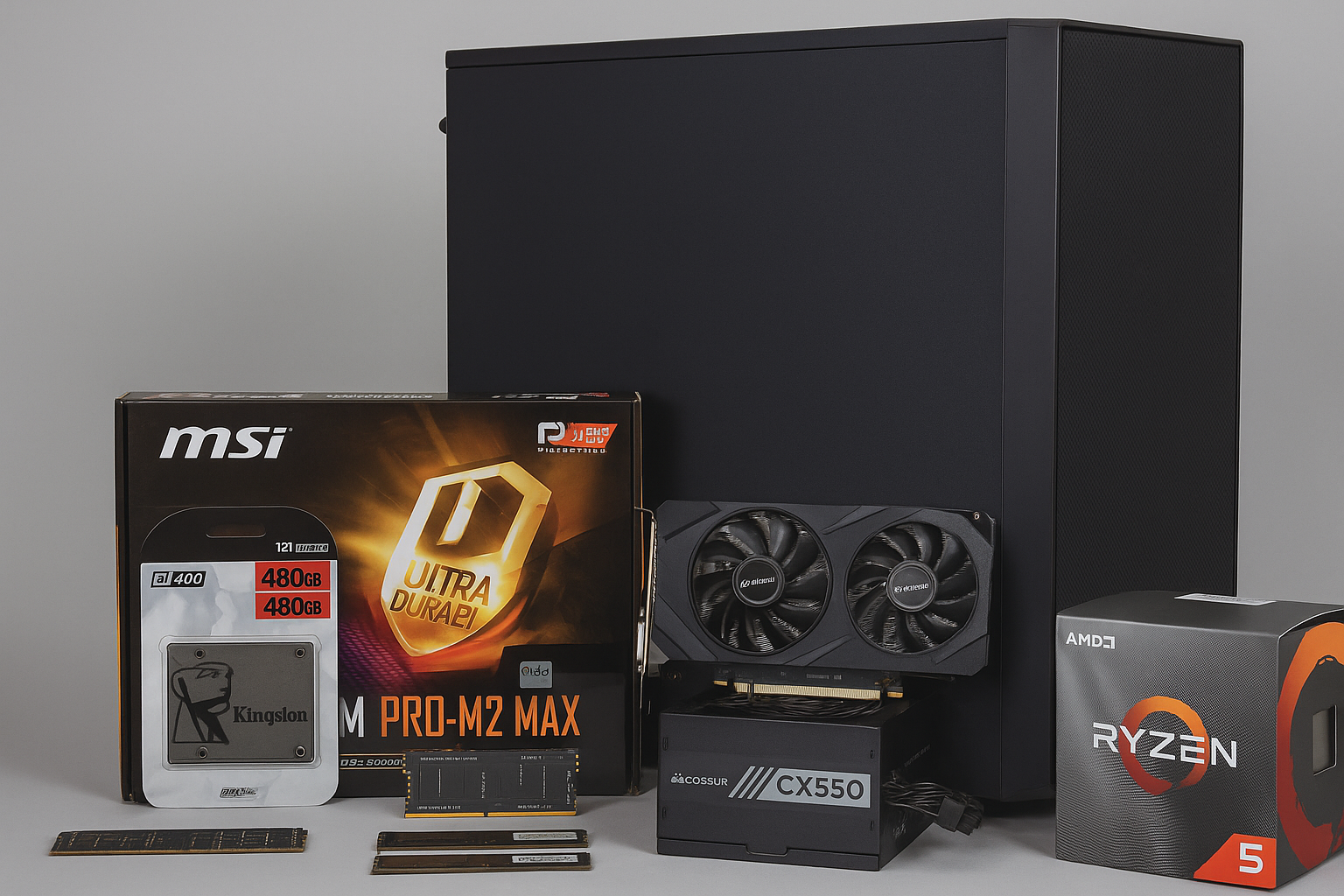
Building a powerful and functional PC for just $500 in 2025 may sound impossible—especially with prices on new components still fluctuating.
But with the right strategy, sourcing used parts can help you create a machine that handles gaming, productivity, streaming, and everyday tasks without breaking the bank.
In this in-depth guide, you’ll learn exactly how to choose, find, and assemble a complete desktop PC using only used hardware, all within a $500 budget. Whether you’re a first-time builder or looking for a budget challenge, this is your blueprint.
Why Build with Used Parts?
Used components have become a go-to option for builders looking to maximize performance per dollar. Benefits include:
- Lower upfront cost
- Access to high-end specs from previous generations
- Eco-friendliness through reuse
- Component availability for legacy systems
That said, the used market also carries risks—so you need to be cautious about where you buy and how you test.
Setting the Budget
Let’s break down our $500 budget into major components:
| Component | Budget Range |
|---|---|
| CPU | $60 – $90 |
| Motherboard | $50 – $70 |
| RAM | $30 – $50 |
| Storage (SSD) | $30 – $40 |
| GPU | $120 – $180 |
| Power Supply | $40 – $60 |
| Case | $30 – $40 |
| Cooling + Extras | $10 – $20 |
| Total | ~$500 |
Now let’s walk through what you can buy in each category to stay within budget.
1. Choosing the Right Used CPU
For a budget build in 2025, two standout options are:
🔹 AMD Ryzen 5 3600 (6-core, 12-thread)
- Excellent for gaming and multitasking
- Prices range $60–80 used
- Compatible with AM4 motherboards
🔹 Intel Core i5-10400 or i5-10400F (6-core, 12-thread)
- Great gaming chip with low power usage
- Around $70–85 used
- Works well with B460 or B560 boards
Avoid anything below 4 cores or older than Intel 8th Gen / Ryzen 2nd Gen for long-term value.
2. Motherboard Options
Used motherboards are affordable but need to be carefully inspected for bent pins and damage.
AMD:
- B450 or B550 motherboards (Micro-ATX preferred to save on case size)
- Typical used price: $50–70
Intel:
- B460 / B560 chipsets for 10th/11th Gen CPUs
- Look for boards with 4 RAM slots and M.2 support
Ensure BIOS compatibility with the chosen CPU, especially for Ryzen.
3. RAM – 16GB Minimum
In 2025, 8GB is no longer enough for most users. Aim for:
- 16GB (2x8GB) DDR4 3200MHz if possible
- Used kits go for $35–50 depending on brand and speed
Avoid mixed-brand kits unless you’re experienced in memory timing.
4. Storage – SSD is a Must
Mechanical drives are too slow. Opt for:
- SATA SSD (500GB) – $25–35 used
- M.2 NVMe SSD – ~$40 for faster speeds (if motherboard supports it)
Brands like Crucial, WD, and Samsung are reliable even used—just verify wear level.
5. Graphics Card (GPU)
This is where your performance will shine or suffer. Options in 2025 under $180:
🔹 Nvidia GTX 1660 Super
- Great 1080p performance
- Found for $120–150 used
🔹 AMD RX 580 8GB or RX 5500 XT
- Slightly older but still capable
- Priced around $100–130 used
🔹 Intel Arc A380 / A580 (used/refurb)
- Good pricing and newer features
- Check driver stability
Avoid mining-damaged GPUs—always ask for usage history and benchmark results.
6. Power Supply (PSU)
Buy this new if possible. If buying used:
- Stick with 80+ Bronze or Gold rated brands (Corsair, Seasonic, EVGA)
- At least 500W
- Check for bent pins, damaged cables, and fan noise
Expect to pay $40–60 used or for refurbished units.
7. Case – Cheap and Functional
Cases are safe to buy used, especially if they come with fans.
- Look for Micro-ATX or ATX size
- Good airflow and at least 2 included fans
- Price: $25–40 depending on brand and condition
Examples: Cooler Master, NZXT, DeepCool, or even older Corsair models.
8. Cooling and Extras
You can usually reuse the stock cooler included with your CPU. If not:
- Aftermarket coolers like the Cooler Master Hyper 212 or Arctic Freezer are ~$20 used.
- Always apply new thermal paste – a $5 tube lasts for multiple builds.
If your motherboard or case lacks fans, budget $5–10 for each 120mm fan.
Sample $500 Used PC Build (July 2025)
| Component | Model | Price (Used) |
|---|---|---|
| CPU | Ryzen 5 3600 | $70 |
| Motherboard | B450M | $60 |
| RAM | 16GB DDR4 3200MHz | $40 |
| SSD | 500GB SATA | $30 |
| GPU | GTX 1660 Super | $140 |
| PSU | EVGA 500W 80+ Bronze | $50 |
| Case | DeepCool MATREXX 30 | $30 |
| Cooling | Stock cooler + paste | $5 |
| Total | — | $495 |
This rig handles 1080p gaming, creative work, web development, and everyday productivity like a champ.
Where to Buy Used Parts Safely
To protect yourself from scams or defective gear, stick to:
- eBay (Top Rated Sellers)
- Amazon Renewed
- Newegg Refurbished
- Reddit’s /r/hardwareswap
- Facebook Marketplace (local pickups only)
Always test parts upon arrival. Look for listings with:
- Photos
- Proof of functionality (benchmarks)
- Return policy or buyer protection
How to Test and Validate Your Build
Once everything is assembled:
- Boot into BIOS to check that all components are detected.
- Use HWMonitor to check temperatures.
- Run MemTest86 to test RAM stability.
- Benchmark GPU with FurMark or 3DMark.
- Stress test CPU with Cinebench or Prime95.
Fix thermal or stability issues early—used parts sometimes need a bit of tweaking.
Bonus: Optional Upgrades to Plan Later
If you end up with a bit more budget in the future, prioritize:
- Upgrading to NVMe SSD for faster boot times.
- Adding a secondary 1TB HDD for storage.
- Swapping in a better GPU like RTX 3060 or RX 6700 XT if prices fall.
- Upgrading RAM to 32GB for creative or multitasking workloads.
Your $500 build forms a strong foundation for future enhancements.
Final Thoughts: Big Value on a Tight Budget
Building a PC for $500 using used components is absolutely possible in 2025—with care and planning. You’ll get a machine that can handle gaming, productivity, and even some creative workloads, all while keeping your wallet happy.
Stick to reputable sources, test thoroughly, and focus on components that offer the best performance per dollar. A smart budget build doesn’t mean cutting corners—it means making every dollar count.

Chris Dalton is a tech enthusiast with a passion for helping others build high-performance PCs on a budget. He shares practical advice, in-depth guides, and honest insights to empower freelancers, gamers, and creators to get the most out of their hardware. With hands-on experience and a focus on smart, affordable solutions, Carlos Eduardo turns complex tech into accessible knowledge for all.