
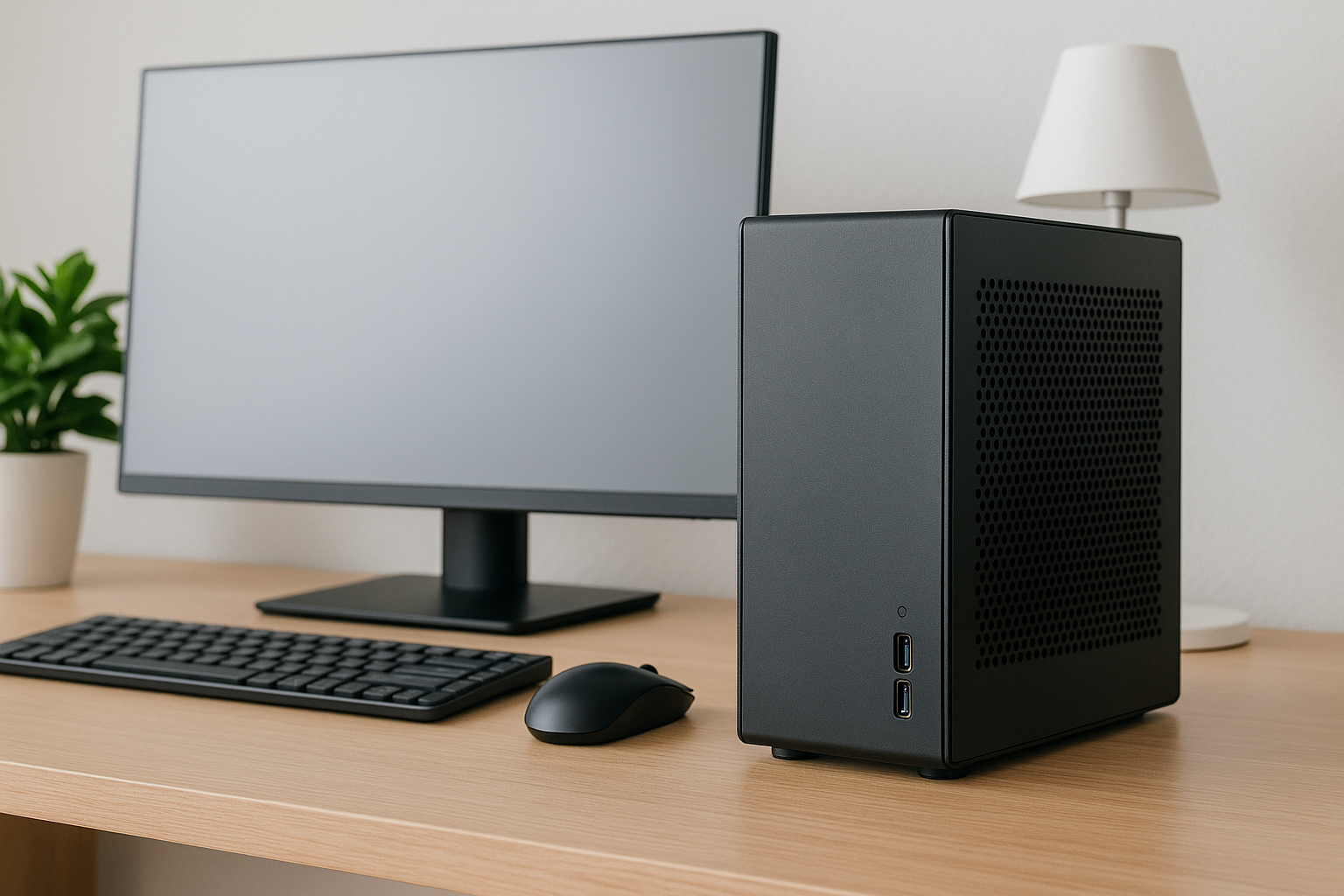
Remote work has become a permanent reality for millions of professionals. In 2025, home offices are no longer temporary solutions, but fully equipped work environments designed for productivity, comfort, and efficiency.
As professionals rethink their setups, Mini SFF PCs have gained significant attention. These compact systems promise high performance while saving space and improving desk organization.
This guide explores whether a Mini SFF PC is truly worth it for remote work and home office setups, analyzing performance, ergonomics, reliability, and long-term value.
The Evolution of Home Office Workspaces
Home offices have changed dramatically.
What once required only a laptop now often includes multiple monitors, external peripherals, video conferencing tools, and productivity software. Workloads have become more demanding.
Professionals now need systems that are:
- Reliable
- Quiet
- Powerful
- Space-efficient
Mini SFF PCs fit naturally into this evolution.
Why Desk Space Matters More Than Ever
Desk space directly affects productivity.
Crowded desks create visual clutter, limit movement, and reduce comfort. Large towers often dominate home office layouts.
Mini SFF PCs free up space by:
- Occupying minimal desk or floor area
- Allowing flexible placement
- Supporting cleaner cable management
A clean desk promotes focus and efficiency.
Performance Needs of Remote Workers
Remote work performance requirements vary widely.
Some users focus on basic tasks like documents and video calls. Others handle heavy multitasking, data analysis, or creative workloads.
Mini SFF PCs can support:
- Office productivity software
- Web-based tools
- Virtual meetings
- Development environments
- Light to moderate creative work
Proper configuration determines capability.
CPU Performance for Everyday Productivity
CPU performance impacts daily responsiveness.
Modern Mini SFF builds can use highly efficient CPUs that excel at multitasking without excessive power consumption.
Benefits include:
- Fast application launches
- Smooth multitasking
- Reliable video conferencing
- Low heat output
For most remote workers, mid-range CPUs are more than sufficient.
Multitasking and Workflow Efficiency
Remote work often involves multitasking.
Email, browsers, communication apps, and specialized software run simultaneously. Mini SFF PCs handle this easily with proper RAM and storage.
Key requirements include:
- Adequate RAM capacity
- Fast SSD storage
- Stable system performance
Compact size does not limit multitasking.
Noise Levels in Home Office Environments
Noise matters more at home.
Loud systems disrupt focus and interfere with calls and recordings. Mini SFF PCs, when properly built, can be extremely quiet.
Quiet operation is achieved through:
- Efficient components
- Optimized airflow
- High-quality fans
- Thoughtful fan curves
Silence improves concentration and professionalism.
Video Conferencing and Communication Reliability
Video calls are central to remote work.
System stability, camera support, and audio performance are essential. Mini SFF PCs provide stable platforms for daily communication.
Advantages include:
- Consistent performance during calls
- Support for multiple displays
- Reliable connectivity options
A stable system reduces work interruptions.
Multi-Monitor Support for Productivity
Many remote professionals rely on multiple monitors.
Mini SFF PCs easily support:
- Dual or triple monitor setups
- High-resolution displays
- Smooth desktop scaling
This enhances multitasking and workflow organization without needing large systems.
Power Efficiency and Energy Consumption
Energy efficiency matters in home environments.
Mini SFF PCs typically consume less power than large desktops. This reduces electricity costs and heat output.
Lower power usage results in:
- Cooler rooms
- Reduced fan noise
- Lower long-term costs
Efficiency supports sustainable home offices.
Ergonomics and Workspace Integration
Ergonomics go beyond chairs and desks.
System placement affects posture, cable routing, and monitor positioning. Mini SFF PCs integrate more easily into ergonomic setups.
They allow:
- Flexible placement options
- Easier cable organization
- Better monitor alignment
Ergonomic setups improve long-term comfort.
Portability for Hybrid Work Lifestyles
Some professionals alternate between home and office.
Mini SFF PCs offer better portability than traditional desktops. They can be moved more easily when needed.
This is ideal for:
- Hybrid workers
- Freelancers
- Consultants
- Temporary office setups
Compact systems adapt to changing routines.
Reliability for Daily Professional Use
Reliability is non-negotiable.
Remote workers depend on their systems for income. Downtime impacts productivity and deadlines.
Mini SFF PCs, when built with quality components, offer:
- Stable long-term performance
- Low failure rates
- Predictable thermal behavior
Reliability comes from smart component choices.
Storage Needs for Remote Work
Storage requirements vary by profession.
Documents, media files, and project data require fast and reliable storage. Mini SFF PCs support modern storage solutions easily.
Common configurations include:
- NVMe SSDs for OS and apps
- Additional SSDs for projects
- External drives for backups
Fast storage improves workflow speed.
Networking and Connectivity Stability
Remote work depends on connectivity.
Mini SFF PCs support modern networking standards, including high-speed Ethernet and advanced Wi-Fi options.
Reliable connectivity ensures:
- Stable video calls
- Fast file transfers
- Secure cloud access
Connectivity should never be a limitation.
Maintenance and Long-Term Use
Home office systems run daily.
Mini SFF PCs require regular but manageable maintenance. With proper airflow and cleaning routines, they remain reliable for years.
Maintenance includes:
- Periodic dust cleaning
- Software updates
- Monitoring temperatures
Consistent care ensures longevity.
Cost Considerations for Home Office Builds
Cost is an important factor.
Mini SFF builds can be slightly more expensive than ATX systems due to specialized components. However, value comes from efficiency and longevity.
Long-term value includes:
- Lower power consumption
- Reduced space requirements
- Extended component lifespan
Cost should be evaluated holistically.
Security and Professional Reliability
Security matters in remote work.
Mini SFF PCs support modern security features, encryption, and secure authentication tools.
This is essential for:
- Corporate environments
- Freelancers handling client data
- Professionals working with sensitive information
Compact systems do not compromise security.
Who Benefits Most From a Mini SFF Home Office PC
Mini SFF PCs are ideal for:
- Remote professionals
- Freelancers
- Content creators
- Developers
- Consultants
Anyone valuing performance, silence, and space efficiency benefits greatly.
When a Mini SFF PC Might Not Be Ideal
Mini SFF PCs are not for everyone.
Users requiring extreme expansion, constant hardware swapping, or very large GPUs may prefer larger cases.
Understanding limitations helps set realistic expectations.
Is a Mini SFF PC Worth It in 2025?
For most remote workers, the answer is yes.
In 2025, Mini SFF PCs offer an excellent balance of performance, efficiency, and design. They fit modern home offices perfectly, supporting productivity without clutter.
When properly planned and maintained, a Mini SFF PC becomes a reliable, quiet, and powerful tool for remote work.

Chris Dalton is a tech enthusiast with a passion for helping others build high-performance PCs on a budget. He shares practical advice, in-depth guides, and honest insights to empower freelancers, gamers, and creators to get the most out of their hardware. With hands-on experience and a focus on smart, affordable solutions, Carlos Eduardo turns complex tech into accessible knowledge for all.